Blog · travelling with dogs · lost dog · EU pet passport · dog tag
Dog lost abroad: what to do when you don't speak the language
A dog lost abroad is hard enough without a language barrier. How to prepare the chip, the paperwork and the tag so a finder can reach you on holiday.
· 5 minute read
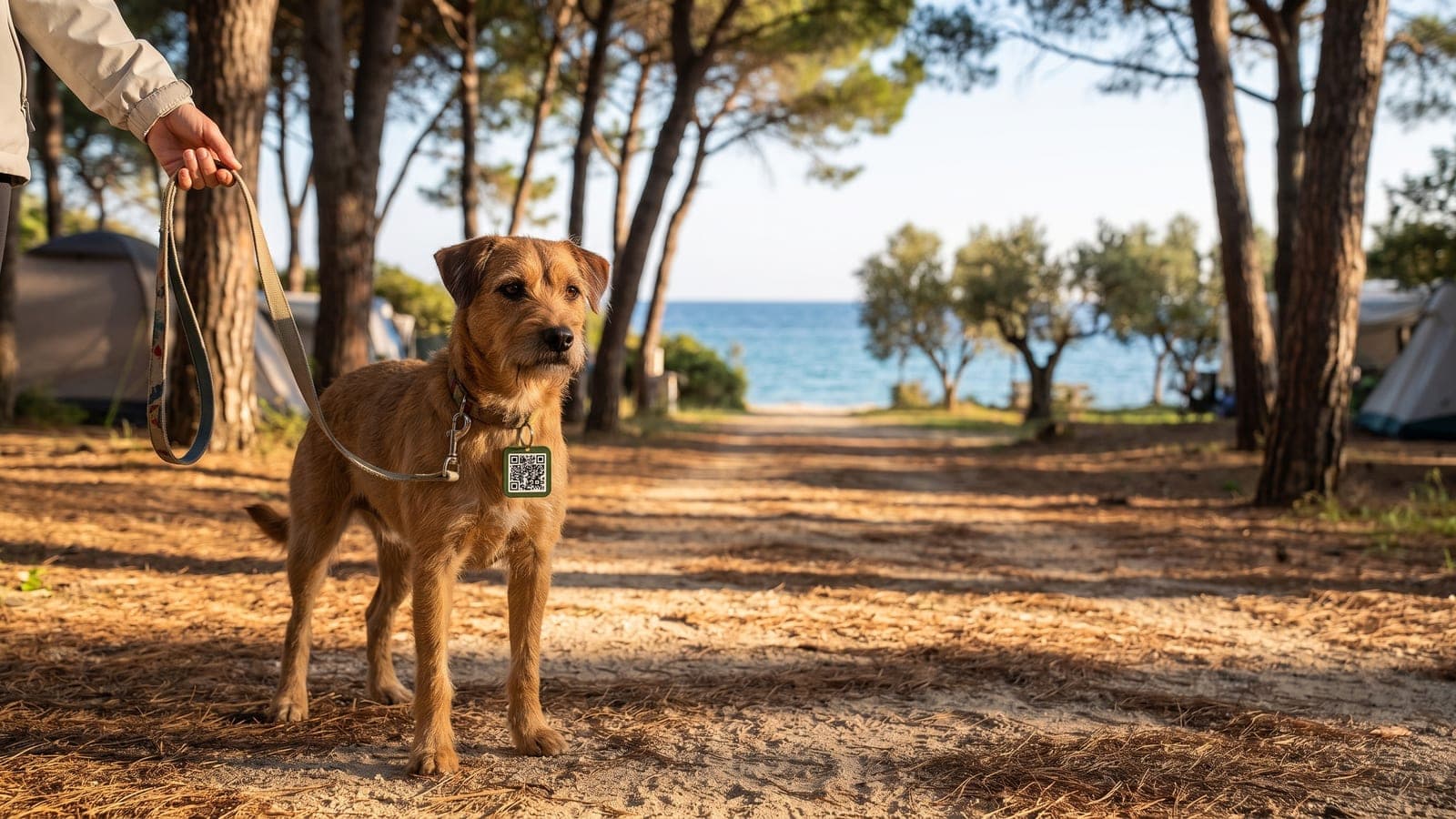
A dog lost abroad is a different problem from a dog lost at home. At home you know which vet to ring and which park to check. On a campsite in Italy or a beach in Spain you know neither, and the person who picks up your dog probably doesn't speak your language.
Most of what helps in that moment is done before you leave.
Before you go: paperwork, chip and vaccination
Travel with a dog inside the EU follows one set of rules. According to the EU's official Your Europe portal, your dog needs:
- a microchip (or a clearly readable tattoo applied before 3 July 2011),
- a rabies vaccination, with a wait of at least 21 days after the first vaccination before you travel,
- a valid EU pet passport,
- for Finland, Ireland, Malta, Norway and Northern Ireland, a tapeworm treatment given 24 to 120 hours before travel.
The pet passport holds the chip number and your contact details, among other things. Take a photo of those pages before you set off, so the number is always with you.
The legal basis for these rules was replaced in April 2026, so older guides online may be out of date. We are not lawyers or vets. Read the official EU page before every trip and talk to your vet. Trips to countries outside the EU, and the journey back from them, come with further rules, so check in good time.
A chip only helps if it is registered
Nobody can see a microchip from the outside. It takes a reader, which vets and shelters have. And the number only leads to you if it sits in a registry next to contact details that are still correct.
If you live in Germany, that registry is usually TASSO. Registration is free, and TASSO says its emergency line is staffed around the clock, Sundays and public holidays included: +49 6190 937300. Its travel checklist says to update your contact details and keep three things to hand: the emergency number, your TASSO ID and the chip number. TASSO is also connected to the search portals europetnet.com and petmaxx.com, which help return pets to their owners across borders.
If you live elsewhere, ask your vet which database holds your dog's chip number, and check that your phone number there is current.
The language problem: what does the finder understand?
The chip is plan B. Plan A is that the person holding your dog by the collar can reach you directly. This is where language gets in the way.
An engraved tag with a foreign mobile number asks a lot of a finder: dial an international number, then talk to a stranger in a language neither of you may speak well. That is a high bar.
A tag with a QR code or an NFC chip moves the conversation onto a web page. And a web page can speak more than one language.
Since 28 September 2026, the page a finder sees after scanning a PawBack tag is available in Spanish, French and Italian as well as German and English. A language switcher on the page lets the finder choose.
The finder needs no app and no account. They see your dog's profile and write a message in the contact form, and we pass it on to you. Your phone number stays private unless you decide to show it. Why that matters is covered in our guide What should a dog tag actually reveal?
Some limits you should know about:
- Five languages are not every language. In Portugal, Poland or Greece, the finder has to manage with one of the five.
- The finder needs mobile internet. No signal, no page.
- Keep your own profile notes short. Use plain sentences and add a line in English.
- A tag does not locate your dog. If you hike in remote areas where few people pass, a GPS tracker is the sensible addition. We explain the difference in AirTag, Tractive or PawBack.
Make sure the message can reach you
A message only helps if your phone can receive it.
Inside the EU you "roam like at home": calls, texts and data are charged at domestic rates, according to Your Europe. The same applies in Iceland, Liechtenstein and Norway. Your operator may cap roaming data under a fair use policy, and roaming outside the EU and EEA can be expensive. Check your plan before you leave, and keep mobile data and notifications switched on.
If it happens: first steps abroad
The basics are the same everywhere: don't chase, note the place and time, call calmly. The full version is in our lost dog checklist for the first 60 minutes. Abroad, add these:
- Find someone who speaks the language. Ask reception, your host or the campsite office to phone the nearest vet and shelter with you.
- Report your dog missing to your registry. With TASSO you can do this online or by phone.
- Switch on lost mode if your dog wears a PawBack tag. The public page then shows a red banner.
- Have a recent photo and the chip number ready.
- Ask locally where found animals are reported. This differs from country to country.
Short checklist before you leave
- EU pet passport packed, vaccinations checked with your vet
- Chip registered, contact details up to date
- Registry number and chip number saved on your phone
- Tag on the collar, profile current, scanned once
- Mobile data sorted for your destination
If you don't have a suitable tag yet
A PawBack tag costs €9.99 once, with no subscription. The profile is hosted free for the lifetime of the service. Every tag is printed in Düsseldorf, and we ship within the EU only. Have a look at the PawBack tag.
Whatever tag you choose, what matters is that your dog wears something a stranger can use to reach you.